If you have opened a letter from your water provider saying your backflow device is due for testing, you are not alone. Every year, homeowners, property managers, and business owners across Champaign County receive the same reminder, and many are not sure what it means or why it matters.
The short answer is that Illinois requires backflow prevention devices, including RPZ valves, to be tested every year to keep the public water supply safe. In this guide, the plumbers at Lanz, Inc. explain who needs testing, what happens during a test, and how to stay compliant without the hassle.
A Quick Refresher: What Is an RPZ?
An RPZ, or reduced pressure zone assembly, is one of the most protective types of backflow preventer. It uses two independent check valves with a pressure relief valve between them. If pressure changes ever try to push water backward from your property into the public water system, the RPZ stops it and safely discharges water through the relief valve.
For a deeper look at how RPZs work and where they are installed, read our guide on things to know about RPZ reduced pressure zone valves.
Why Illinois Requires Annual Testing
Backflow happens when water flows in the opposite direction of its intended path. When that occurs through an unprotected cross-connection, contaminants like lawn chemicals, boiler treatment fluid, or commercial cleaning solutions can enter drinking water lines.
To prevent that, Illinois regulations require cross-connection control devices to be inspected at least once a year by a person approved by the Illinois EPA as a Cross-Connection Control Device Inspector, often called a CCCDI. To earn that approval, a tester must be authorized to perform plumbing under the Illinois Plumbing License Law and pass both written and hands-on exams. In other words, not just anyone can test your RPZ. It has to be a licensed plumber with the proper certification.
Local water providers enforce these rules. Illinois American Water, which serves Champaign and Urbana, conducts cross-connection surveys and keeps test reports on file for devices in its system. Many communities across the state also set their own deadlines and follow-up procedures for overdue tests.
Who Needs Backflow Testing?
If your property has an RPZ or another testable backflow assembly, it needs to be tested every year. Some of the most common examples include:
- Lawn irrigation and sprinkler systems, which can draw fertilizer and pesticide residue back toward the water line
- Fire sprinkler systems in commercial and multi-unit buildings
- Restaurants and commercial kitchens with dishwashers, soda fountains, and chemical dispensers
- Medical and dental offices, salons, and other businesses that use water with equipment or chemicals
- Buildings with boilers or water-cooled equipment, where treated water could flow backward
- Apartment complexes, churches, schools, and other facilities that the water provider has identified as needing protection
Homeowners are often surprised to learn they have an RPZ at all. If you have an in-ground sprinkler system, there is a good chance one is installed on your property.
What Happens During an RPZ Test
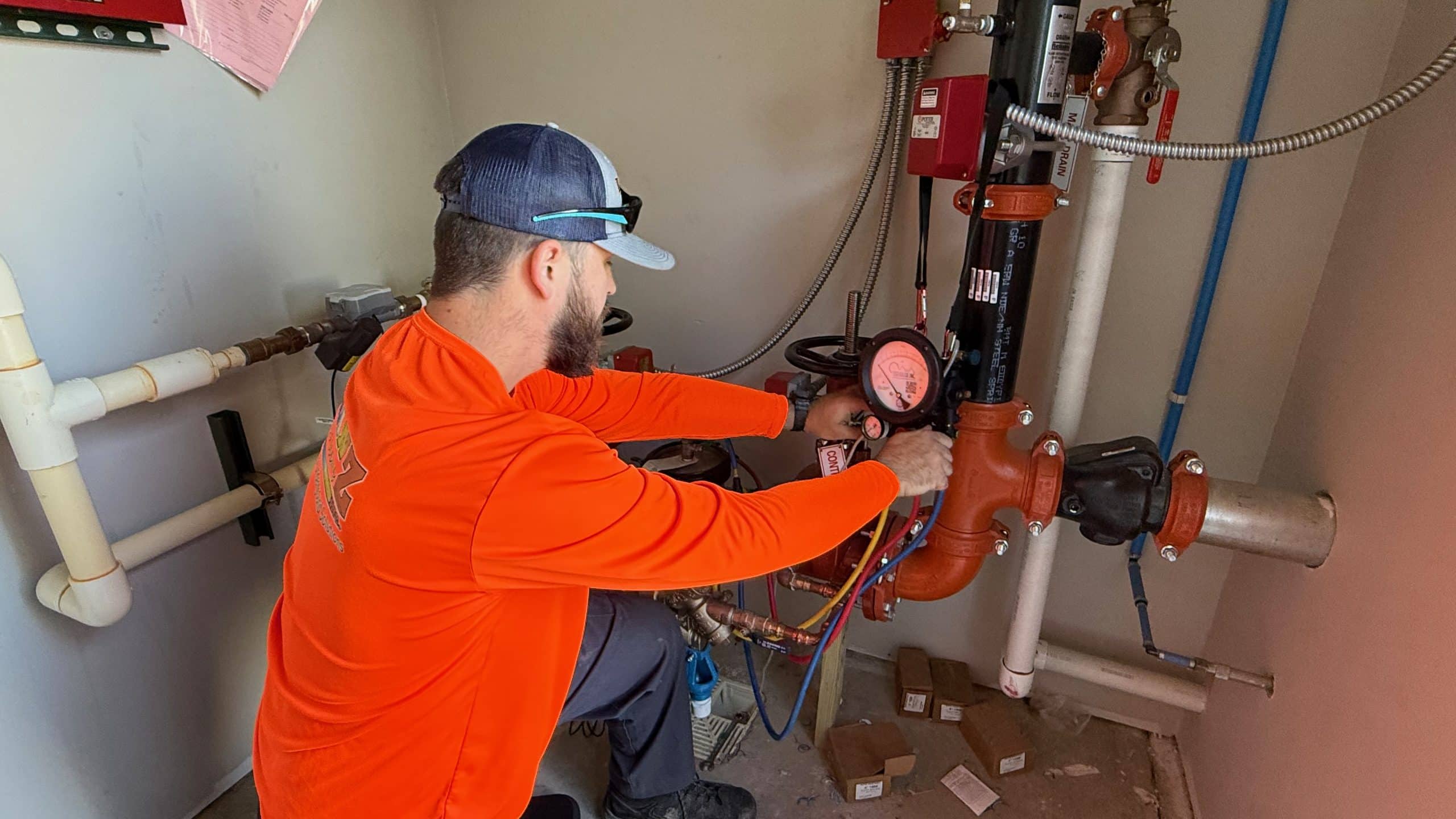
A backflow test is quick and does not require tearing anything apart. Here is what to expect when one of our plumbers arrives:
- A brief water shutoff. Water flow through the device is paused during the test, so we will let you know ahead of time. For businesses, we can work with you on timing to keep disruption low.
- Connecting the test kit. We attach a calibrated backflow test kit to the test cocks on the assembly.
- Checking each component. We measure the performance of both check valves and confirm the relief valve opens at the correct pressure.
- Recording the results. The device is tagged with the test date and the tester’s information, and the results are documented on the required report.
- Restoring service. Water is turned back on and the device is returned to normal operation.
What If the Device Fails?
A failed test is more common than you might think, especially with older assemblies or devices exposed to debris and hard water. Worn rubber parts, springs, and seats are the usual culprits. In many cases, the assembly can be repaired with a rebuild kit and retested the same visit. If the device is too worn or damaged, we can replace it and handle the required test on the new assembly.
Either way, the goal is the same: get your device working properly and keep your property in compliance. Our RPZ and backflow services cover testing, repair, and installation.
What Happens If You Skip Your Annual Test?
Water providers take overdue tests seriously because a failed or untested device puts everyone’s drinking water at risk. Depending on your provider and community, missing a deadline can lead to follow-up notices, fines, and in some cases interruption of water service until the device is tested. Scheduling your test as soon as you receive a reminder is the easiest way to avoid any of that.
Protecting Outdoor RPZs Before Winter
Fall is an important time for anyone with an RPZ on an irrigation system. Water left inside an outdoor assembly can freeze and crack the body or damage internal parts, which often means a costly replacement come spring. Before the first hard freeze in Central Illinois, outdoor RPZs should be drained and winterized, or protected with an insulated enclosure if they stay in service year-round.
If your sprinkler RPZ needs testing this year, scheduling it alongside your fall shutdown is an efficient way to check both boxes in one visit.
Tips for Staying Compliant Year After Year
- Test at the same time every year. Pairing your test with spring irrigation startup or fall shutdown makes it easy to remember.
- Keep your records. Save copies of each test report in case your water provider asks for them.
- Watch for warning signs. Water discharging from the relief valve between tests can signal a problem worth checking right away with a plumbing repair visit.
- Do not remove or bypass a device. Removing a required backflow preventer usually requires approval and the right permits.
- Plan ahead for new equipment. Adding irrigation, a boiler, or commercial equipment may require new backflow protection, so mention it when you schedule plumbing installation work.
Why Champaign County Trusts Lanz, Inc.
Since 2002, Lanz, Inc. has provided residential and commercial plumbing throughout Champaign-Urbana and East Central Illinois. Our licensed plumbers handle RPZ testing, repairs, replacements, and new installations for homes, apartment complexes, restaurants, and other businesses. For property managers and facility owners, our commercial plumbing team can help keep multiple devices on schedule. We bring the same transparent flat-rate pricing and 100% satisfaction guarantee to every job, large or small.
Frequently Asked Questions
How often does an RPZ need to be tested in Illinois?
At least once a year. Illinois regulations require backflow prevention devices to be inspected annually by an Illinois EPA approved Cross-Connection Control Device Inspector, and devices are also tested when they are first installed.
How long does a backflow test take?
Most tests take well under an hour when the device is accessible and working properly. Repairs or replacements add time, and we will walk you through any findings before doing additional work.
Can I test my own RPZ?
No. Testing must be performed by a licensed plumber who holds Illinois EPA approval as a Cross-Connection Control Device Inspector.
Will my water be shut off during the test?
Water flow through the device is paused briefly while the test is performed. We will let you know before we begin so you can plan around it.
My RPZ is leaking water from the bottom. Is that normal?
Occasional discharge can happen during sudden pressure changes, but constant or frequent dripping from the relief valve usually means something inside the assembly needs attention. Call us to have it checked.
Schedule Your RPZ Backflow Test Today
Do not wait for a second notice from your water provider. Call 217-394-1380 or contact us online to schedule your annual RPZ backflow test with the licensed plumbers at Lanz, Inc.