Know Exactly What's in Your Sewer Line Before it Becomes an Emergency in Champaign, IL
When drains back up, run slowly, or smell, the problem could be roots, a collapsed pipe, a broken joint, or an illegal storm drain connection. Guessing wastes money. A sewer camera inspection gives you a clear, recorded look inside your drain lines so every repair decision is based on facts — not assumptions.
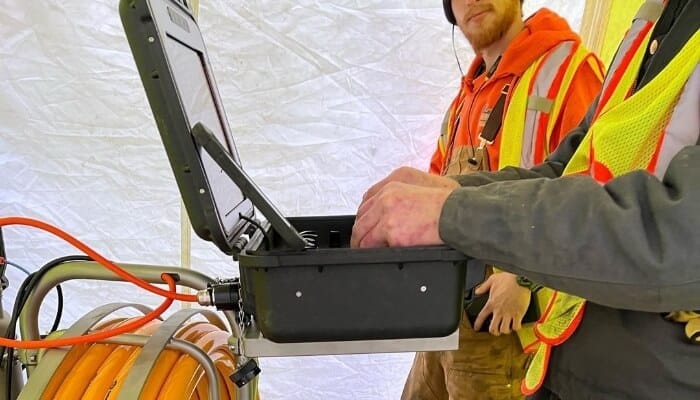
At Lanz, we use push-rod and crawler camera systems to inspect lines from 2" to 8"+ in diameter. We locate the problem, mark it, measure it, and deliver the findings in a format you can share with contractors, real estate agents, or your insurance company.
Ready to know exactly what's in your line? Call Lanz at 217-394-1380 or request service online — same-day appointments are often available.
Sewer Camera Inspection FAQs
Your inspection video and written findings are delivered as an email link you can view on any computer or smartphone, and share with anyone who needs it — a real estate agent, home inspector, insurance adjuster, municipality, city utility, or attorney. Reports are assigned by property address rather than owner name, so the record stays with the house through future ownership changes.
If a formal BDSL (Building Drain & Sewer Lateral) report is required — for real estate transactions, insurance claims, court cases, or new construction sign-off — that's a separately priced document. See pricing below.
Yes, and most buyers don't. A standard home inspection doesn't include the sewer line. A broken clay tile line or collapsed Orangeburg section can cost $5,000–$15,000+ to repair, and that's the buyer's problem after closing. A camera inspection before closing is the most cost-effective due diligence a buyer can do in Champaign-Urbana's older housing stock.
One detail worth knowing: Lanz files reports by property address, not owner name. That means your inspection record stays with the house for future transactions — the next buyer can retrieve it too.
For main sewer lines: annually for any home with clay tile anywhere in the lateral, any home with a history of root infiltration, and any home where a structural defect is being monitored rather than immediately repaired. Annual inspection catches problems while they're predictable maintenance — not 10 p.m. emergencies on Thanksgiving or Christmas when overtime and cleanup costs compound fast.
For small-diameter drains (sinks, tubs, showers, floor drains): routine camera inspection generally isn't worth the cost unless a specific line has a documented history of repeated problems.
It's the most accurate diagnostic tool available, but there are honest limitations. A line has to be reasonably clean — standing waste or stirred-up sediment clouds the view. Heavy root pads can hide structural damage behind them, which is why we typically clean a main before cameraing it rather than trying to inspect through debris. Turns limit reach, and our push cameras top out at 200 feet. For severely collapsed lines, we report findings up to the point of stoppage and recommend clearing before re-inspection.
For main sewer lines, yes — camera inspection is included in every main sewer cleaning we do. It's how we verify the line was cleaned to the industry standard of 95% pipe capacity, and how we document that for you. We won't charge a separate camera fee when it's part of a cleaning.
For small-diameter drains, we camera when there's a specific reason — a recurring problem on the same line, or symptoms that don't add up diagnostically.
Yes. Our team includes NASSCO PACP-certified technicians, meaning our inspection reports follow the standardized protocol that municipal engineers use to evaluate sewer pipe conditions. If a defect turns out to be in the city's section of pipe, our documentation is formatted in the language city engineers recognize, which puts you in a much stronger position to have the city take responsibility for the repair. Most private contractors in this area cannot provide this level of documentation. You can verify our technicians' credentials by name and certification number at nassco.org.
Yes. Post-repair verification is standard on every CIPP lining and excavation job we complete. It's also available as a standalone service if you had work done by another contractor and want to confirm it was done correctly.
On a case-by-case basis, for engineering studies, insurance or damage claims, and legal matters, where a documented inspection is warranted. Field tile work is billed on a time-and-materials basis — access points often need to be excavated along the run, and conditions inside the tile are unpredictable. We don't take routine farm field-tile jobs, and we'll tell you upfront if a request falls outside a normal camera inspection.
NASSCO PACP-Certified Camera Inspections
Our team includes NASSCO PACP-certified technicians — and in the Champaign area, that's rare. PACP (Pipeline Assessment and Certification Program) is administered by NASSCO, the National Association of Sewer Service Companies. It's the industry standard for documenting what a camera inspection finds inside a sewer pipe, in a format that municipal engineers recognize and accept.
In central Illinois, PACP credentials are almost exclusively held by city engineers and civil engineers. Lanz is one of the only private contractors in the region with PACP-certified technicians on staff.
Why that matters to you: if a camera inspection reveals a defect in the section of pipe that falls under city responsibility, our PACP-formatted documentation can be presented directly to city engineers — in the standardized language they use themselves. That puts you in a much stronger position to have the city acknowledge and take responsibility for the repair, rather than leaving you holding the bill for a problem that isn't yours.
Credentials are publicly verifiable by name and certification number at nassco.org.
What We Inspect
Our camera equipment covers the full range of residential and light commercial pipe systems common in Champaign-Urbana and surrounding Champaign County.
Small-diameter lines (2"–3")
Bathroom sinks, kitchen sinks, floor drains, and branch lines were once impossible to camera. Our small-diameter equipment can pass through a floor drain trap where the line allows and navigate 2" lines with trench rot or broken areas. This matters because it lets us confirm whether a deteriorated small line still has enough structure for a trenchless repair rather than defaulting to replacement.
Standard-diameter lines (3"–6")
Main sewer and drain lines are the most common inspection we run. Our push-rod camera inspects up to 200 feet, covering the full length of most residential mains. All findings are recorded and delivered to you for your records. This includes clay tile, cast iron, Orangeburg, and PVC lines running from the home to the city main or septic system.
Large-diameter lines (6"+)
We use a self-propelled crawler camera designed for 6" pipe and above. This setup is ideal for private sewer mains, field tiles, storm drains, and long runs of 6" corrugated pipe, such as sump collectors. It's also used for commercial applications and agricultural drainage lines where a standard push-rod camera can't reach or navigate the line.
Sump pump discharge lines
We verify where these connect, which matters in older Champaign homes where sump lines are sometimes tied into the sanitary sewer.
What We're Looking For
Champaign-Urbana's older housing stock, heavy clay soils, and freeze-thaw cycles create a predictable set of drainage problems. Common findings include:
- Root intrusion — the leading cause of main sewer blockages in this area, particularly in clay tile lines
- Broken or offset joints — caused by soil movement and freeze-thaw shifting, most often under and around basement slabs
- Deteriorated Orangeburg pipe — fiber-based pipe from the 1940s–60s that collapses from the inside; only visible with a camera
- Illegal storm drain connections — floor drains, sump pumps, and downspouts sometimes tied into the sanitary sewer in older properties
- Trench rot — interior pipe deterioration in plastic lines installed in saturated or chemically aggressive soil
- Cast iron scaling — heavy mineral and root buildup that narrows flow in older cast iron lines
See our full breakdown of what Lanz camera inspections most commonly turn up [link to new blog]
How a Camera Inspection Works
A typical residential sewer camera inspection takes 1.5 to 3 hours, depending on the length and complexity of the line.
- Access the line. We enter through a cleanout, floor drain, or pulled toilet. No digging is required for the inspection itself.
- Run the camera. We push or drive the camera through the line, recording continuously. On standard residential mains, we typically inspect 100–150 feet. Our crawler equipment handles longer commercial runs.
- Locate and mark. When we find a problem, a break, root mass, connection, or deteriorated section, we use a locating wand at the surface to pinpoint the exact spot. We mark it with paint or tape and record the precise measurement from the nearest cleanout.
- Document everything. All findings have been written up, and the video has been saved. You receive the recording and a written report, both of which you may keep and share with your insurance company, a real estate agent, or our Underground department for repair evaluation.
- Walk you through it. We explain what we found, where it is, and what your options are before we leave.
What It Costs
A residential camera inspection is $287, which includes up to 90 minutes of inspection time and your video and written findings delivered by email link.
If a BDSL (Building Drain & Sewer Lateral) report is required, an additional $150 fee applies. A BDSL is an 8–10 page formal NASSCO-certified inspection document — the standard used for real estate transactions, court cases, insurance claims, and new construction sign-off. Not every inspection requires one, and we'll tell you upfront if your situation calls for it.
If the line needs cleaning before it can be properly inspected, we stop, discuss it with you, clean the line, and camera it as part of the cleaning — no separate camera charge.
Camera Inspection vs. Just Rodding
Drain cleaning clears a blockage. It doesn't tell you why the blockage happened, where a break is, or whether your line is structurally sound.
If another company has already located a defect and marked it on the surface, we will relocate it ourselves before we dig. We won't excavate on someone else's mark. A bad locate can turn a straightforward 2.5-foot dig into a hole in the wrong place — under a patio, at the wrong depth, three feet from the actual problem. Re-locating is a liability protection for us and a practical protection for you.
Note: JULIE/811 locates municipal utilities. It does not locate private sewer laterals or private underground lines. If you're planning construction — an addition, a pool, a patio, a driveway — and need to know where your private sewer, sump discharge, or water line runs, that's a job for us, not 811.
What Happens After the Inspection
If we find a problem, our findings go directly to our Underground Solutions department for evaluation and repair. The most common options are:
- Cured-in-place pipe lining (CIPP) — a trenchless method that installs a new pipe inside the old one. No excavation required in most cases. Best for cracks, root infiltration, and minor offsets.
- Pipe descaling — removes heavy mineral and root buildup from cast iron lines before relining.
- Traditional excavation and replacement — necessary for fully collapsed sections, major offsets, or pipe material that can't be lined.
- Directional boring — used when a new line needs to be run under a driveway, landscaping, or structure without open trenching.
Roughly 60–70% of the repair situations we identify can be addressed with a trenchless method. The remaining cases require excavation — but because the problem is precisely located, the dig is targeted, not exploratory.
Champaign City Sewer vs. Outlying Septic Systems
Lanz serves both city customers on the Champaign and Urbana municipal systems and rural customers on private septic.
City connections: We commonly find clay tile mains, illegal storm drain connections, and root infiltration from boulevard trees. We verify the tap location — where your private line meets the city main — and can provide a BDSL report with exact measurements for city records or permit applications.
Septic systems: Inspection focuses on the line from the house to the tank, inlet and outlet baffles where accessible, and distribution lines. Septic-served properties in rural Champaign County often use different pipe materials and have different failure modes than city-connected homes.
Schedule a Camera Inspection in Champaign, IL
Call Lanz at 217-394-1380 or request service online. We serve Champaign, Urbana, Savoy, Mahomet, Rantoul, and surrounding communities in Champaign County.
Camera inspection pricing starts at $287. Same-day appointments are often available. Once any repair is complete, we offer a post-repair camera inspection to confirm the line is clear and the work was done correctly, standard on all CIPP lining and excavation jobs we complete, and available as a standalone service if you had work done by another contractor.